
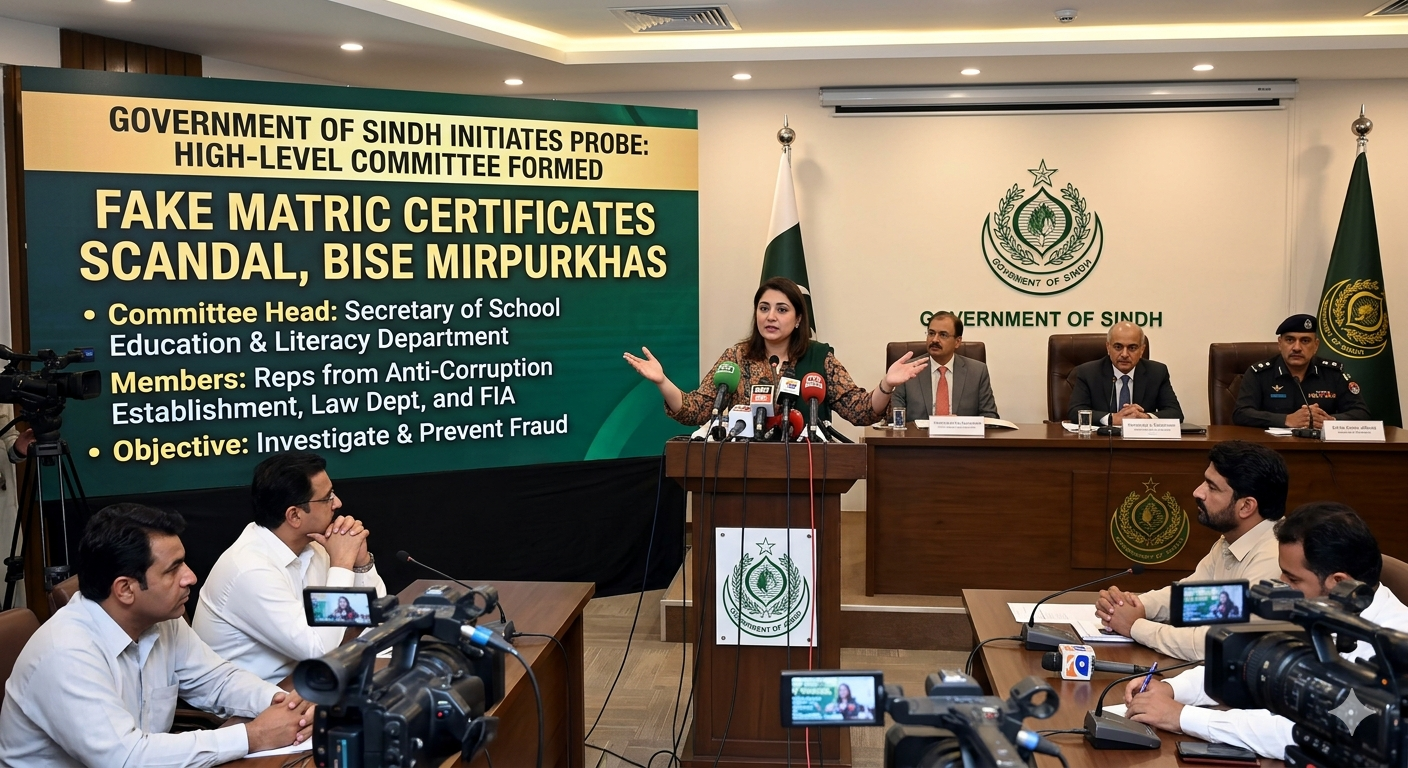
KARACHI — The Sindh government has launched a high-level investigation into a major scandal involving the alleged issuance of fake matriculation certificates and examination irregularities at the Board of Intermediate and Secondary Education (BISE) Mirpurkhas. The matter came to light following the arrest of several junior officials, who reportedly confessed that thousands of counterfeit certificates were issued between 2021 and 2025.
According to police reports, some of these fraudulent certificates were provided to individuals, including Afghan nationals, enabling them to obtain computerized national identity cards (CNICs) and domiciles under pretenses. The revelations have sparked outrage across educational and governmental circles in Sindh, prompting swift action by authorities.
In response, Sindh Minister for Universities and Boards, Muhammad Ismail Rahu, ordered the formation of a three-member inquiry committee tasked with conducting a comprehensive investigation into the scandal. The committee has been given a strict deadline of one month to complete its inquiry, identify those responsible, and submit a detailed report.
The committee’s terms of reference include reviewing the examination system, record management processes, and any suspected manipulation or malpractice within BISE Mirpurkhas. It will investigate how these irregularities occurred, assign responsibility to officials involved in misconduct, negligence, or corruption, and identify systemic weaknesses that allowed such violations to take place. The committee is also empowered to recommend corrective measures and suggest disciplinary or legal action against those found guilty.
The official notification authorizes the committee to seek assistance from any officer or technical expert if necessary. All relevant officials and the board have been directed to fully cooperate and provide access to records, documents, and other evidence required for the investigation.
Following the initial Anti-Corruption Establishment (ACE) investigations, two key officials have already been suspended: Information Technology Manager Azam Khan and Superintendent Muhammad Shahid (HSC Secretariat). Additionally, the Controller of Examinations, Anwar Aleem Khanzada, had been suspended earlier for alleged involvement in the case. These suspensions signal the government’s determination to hold all responsible parties accountable.
Minister Rahu stressed that corruption, forgery, and violations of merit in educational institutions will not be tolerated. He affirmed that the inquiry committee has full authority to uncover the facts, identify system flaws, and ensure strict legal and departmental action. “Any additional officials found involved during the investigation will also face strict action without discrimination,” he added.
The formation of the committee aims not only to hold individuals accountable but also to restore credibility and transparency in Sindh’s education system, which has faced criticism over administrative inefficiencies and irregularities in past years. Education experts say that such measures are crucial to rebuilding public trust and ensuring that merit and integrity are upheld in examination processes.
The investigation is expected to be closely monitored by civil society, educational authorities, and the media, as it may have wider implications for other boards across the province. Officials have promised a transparent inquiry and have called on the public to await the committee’s findings, which could lead to significant reforms in the examination and certification system of Sindh.
About The Author