
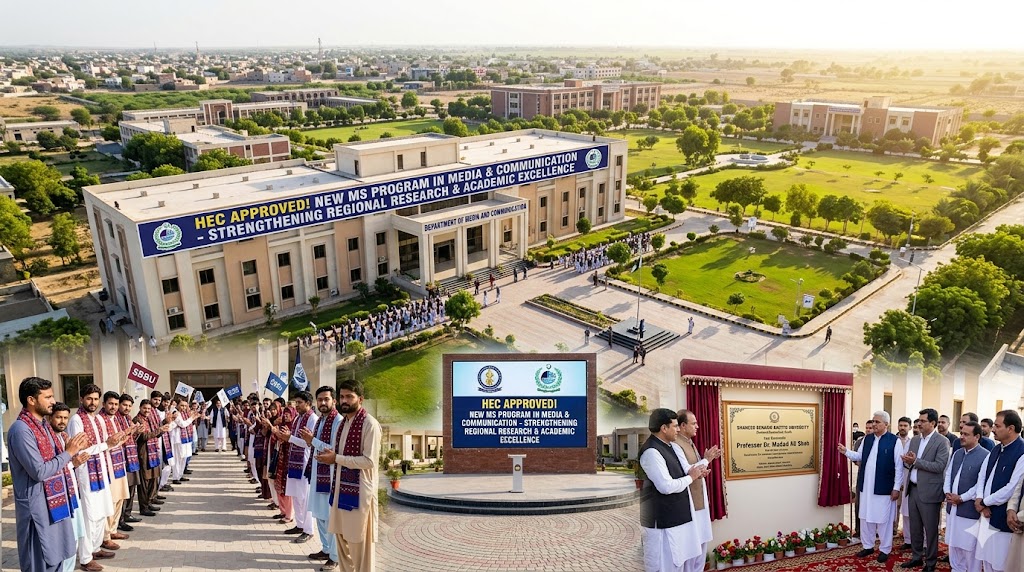
The Higher Education Commission (HEC) in Islamabad has officially granted approval for a new Master of Science (MS) program within the Department of Media and Communication at Shaheed Benazir Bhutto University (SBBU), Shaheed Benazirabad. This academic expansion represents a major milestone for the institution, opening a sophisticated pathway for students in central Sindh to pursue advanced research and specialized studies in the evolving landscape of journalism and mass media.
By introducing this postgraduate degree, the university aims to bridge the gap in higher education accessibility for residents of the region. Traditionally, students seeking advanced media degrees often had to migrate to larger metropolitan hubs like Karachi or Hyderabad. This initiative ensures that high-quality research facilities and advanced learning modules are available locally, fostering a culture of academic excellence within the heart of the province.
While the federal HEC has given its nod, the program’s official commencement is contingent upon the final approval and issuance of a No Objection Certificate (NOC) from the Sindh Higher Education Commission. University officials have confirmed that the formal request for this provincial clearance has already been submitted and is currently in process.
Strengthening Research and Professional Standards
Vice Chancellor Professor Dr. Madad Ali Shah emphasized the transformative power of media in the modern era, noting its fundamental role in shaping social, political, and intellectual discourse.
He observed that the approval of the MS program is not merely an administrative achievement but a strategic move to bolster the university’s research output. The curriculum is designed to equip students with rigorous analytical skills and practical journalistic expertise that align with the rapid technological shifts in the global media industry.
According to Dr. Shah, the presence of such advanced programs significantly enhances an institution’s national reputation. More importantly, it contributes to the broader goal of elevating educational standards across Pakistan.
He expressed a strong conviction that the future graduates of this program will serve as ambassadors for the province, making meaningful professional contributions through their research and ethical reporting.
Impact on Regional Journalism
The introduction of the MS program is expected to have a ripple effect on the local media industry in Sindh. By producing a cohort of scholars trained in modern research methodologies, the university is setting the stage for more data-driven and investigative journalism in the region. The department plans to focus on several key areas of development:
- Developing advanced skills in media ethics and digital communication.
- Promoting indigenous research that addresses the unique social and political challenges of central Sindh.
- Creating a hub for academic debate on the role of regional languages in mainstream media.
As the university awaits the final NOC from the provincial authorities, the faculty is already preparing the infrastructure and research resources necessary to support the incoming batch of scholars. This expansion marks a new chapter for SBBU, as it transitions from providing foundational education to becoming a center for high-level academic inquiry in the field of communication.
About The Author