
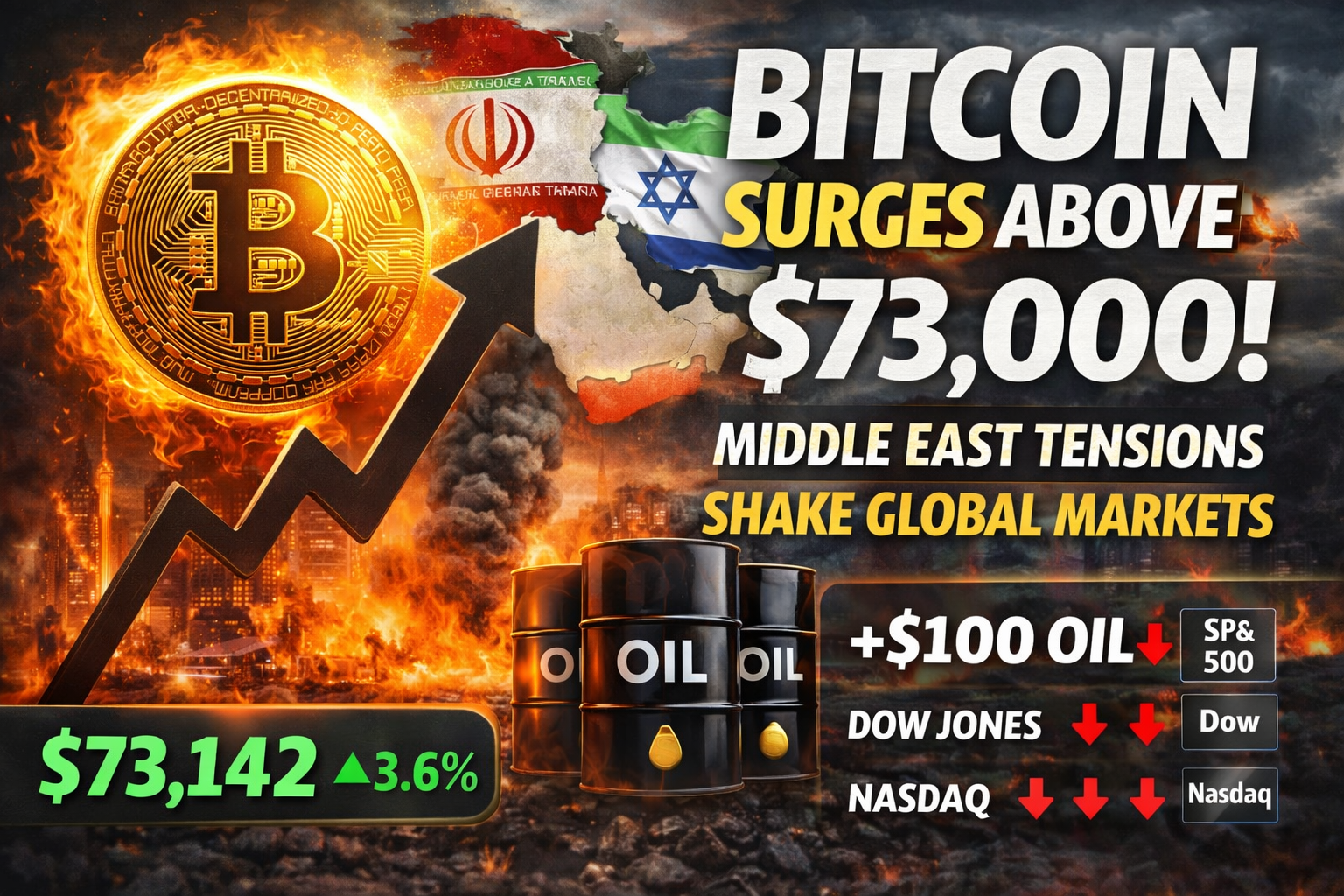
Bitcoin climbed sharply on Friday, reaching its highest level in nearly two weeks as escalating tensions in the Middle East rattled traditional financial markets and pushed oil prices dramatically higher.
The world’s largest cryptocurrency, Bitcoin, rose about 3 percent to around $71,500 by 4 PM Pakistan Standard Time, according to data from CoinGecko. Shortly afterward, the digital asset extended its rally and crossed the $73,000 mark, its strongest level since the latest regional conflict began.
The surge comes amid growing geopolitical uncertainty following the conflict involving Israel, Iran, and the United States. Financial markets worldwide have reacted nervously as the situation threatens to disrupt critical energy routes.
One of the key concerns for investors is the Strait of Hormuz, a narrow but crucial shipping channel through which around 20 percent of the world’s oil supply passes. Any disruption in this corridor could send energy prices soaring and intensify global economic instability.
Oil markets have already shown dramatic reactions. Crude prices surged more than 9 percent, pushing them above $100 per barrel for the first time in years. The jump represents the largest single-day increase in oil prices since the early stages of the COVID-19 pandemic.
Meanwhile, Donald Trump added to market uncertainty after stating that preventing Iran from acquiring nuclear weapons remains a higher priority than stabilizing global oil prices. His remarks underscored the geopolitical stakes and contributed to further volatility in energy markets.
Despite turbulence in traditional markets, Bitcoin has shown notable resilience. Analysts say investors may be turning to cryptocurrencies as a hedge during periods of geopolitical uncertainty and economic instability.
Stock markets, however, struggled under the weight of rising energy costs and global uncertainty. The S&P 500 dropped 1.52 percent, while the Dow Jones Industrial Average fell 1.56 percent. Technology-heavy Nasdaq Composite also declined, slipping 1.73 percent during the same period.
Some market experts caution that the relationship between oil shocks and Bitcoin is complex. Historically, prolonged spikes in energy prices have eventually weakened cryptocurrencies because tighter global liquidity can pressure riskier assets.
“If oil prices remain elevated for an extended period, central banks and investors may become more cautious,” one analyst explained. “That tends to reduce liquidity, which can eventually affect assets like Bitcoin.”
For now, however, many investors appear to believe the oil shock could be temporary. Market participants are still expecting that the current geopolitical tensions will not cause a long-term disruption to financial liquidity.
Adding to Bitcoin’s momentum is strong investor interest in STRC, a financial instrument tied to Bitcoin exposure that currently offers an attractive 11.5 percent yield. The product has drawn attention from institutional investors seeking both yield and exposure to the digital asset market.
While uncertainty remains high, Bitcoin’s ability to hold firm — and even rally — during a period of geopolitical stress highlights the growing role cryptocurrencies are playing in global finance. As markets continue to monitor developments in the Middle East, investors will be watching closely to see whether Bitcoin’s resilience holds or whether further escalation in the crisis shifts sentiment once again
About The Author