
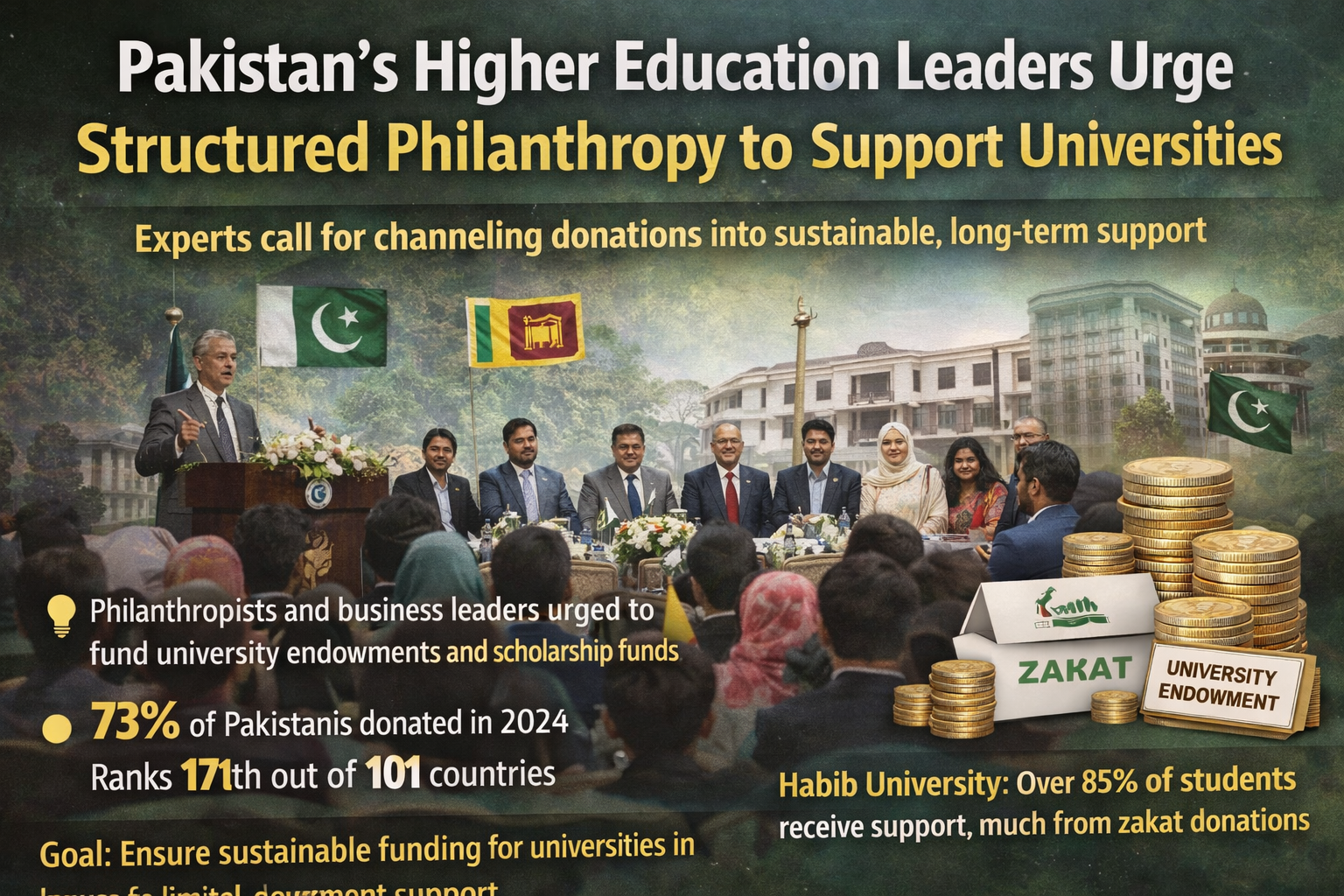
Pakistan’s higher education sector is calling on philanthropists and business leaders to shift from emergency relief donations to structured, long-term support for universities.
According to reports in The Nation, a summit held in Karachi during Ramadan brought together philanthropists, business owners, and education leaders to discuss how Pakistan could better channel its considerable philanthropic resources toward sustainable impact.
Funding for universities in Pakistan remains limited, and endowments are still in their early stages. Leaders at Habib University highlighted that even a modest reallocation of zakat, the mandatory Islamic charitable giving during Ramadan, toward scholarship and institutional endowment funds could create long-term benefits for higher education.
Over 85 percent of Habib University students currently receive financial support, much of it funded by faith-based donations. Despite the country’s economic challenges, Pakistanis are among the world’s top donors, with religious giving being a major driver.
The Pakistan Centre for Philanthropy reports that about 73 percent of Pakistanis donated money in 2024 for social causes, ranking Pakistan 17th out of 101 countries. However, around 42 percent of citizens report being unable to donate due to financial constraints.
Corporate philanthropy in Pakistan is also growing, achieving what experts call ‘landmark growth’ despite the turbulent economy. In 2023, Pakistani businesses collectively allocated 25.4 billion rupees ($90 million) to philanthropic causes, demonstrating the potential for private-sector support to complement public and individual giving.
Experts argue that channelling philanthropy toward structured university endowments and scholarship funds could help Pakistan’s higher education institutions become more sustainable, reduce dependency on short-term aid, and build a skilled workforce for the future.
With rising costs and limited state funding, universities increasingly rely on strategic philanthropy to ensure students can access quality education. Leaders at the summit stressed that a formalized giving structure, including dedicated endowments and long-term scholarship funds, would yield greater social and economic returns than solely responding to immediate crises.
As Pakistan continues to balance economic challenges with a growing population of students seeking higher education, structured philanthropic support may become a critical tool for strengthening the nation’s educational infrastructure, ensuring opportunities for talented students across all socioeconomic backgrounds.
This initiative marks a shift in mindset, encouraging philanthropists to think beyond emergency relief and focus on long-term investment in human capital, which could have lasting benefits for both universities and society at large.
About The Author