
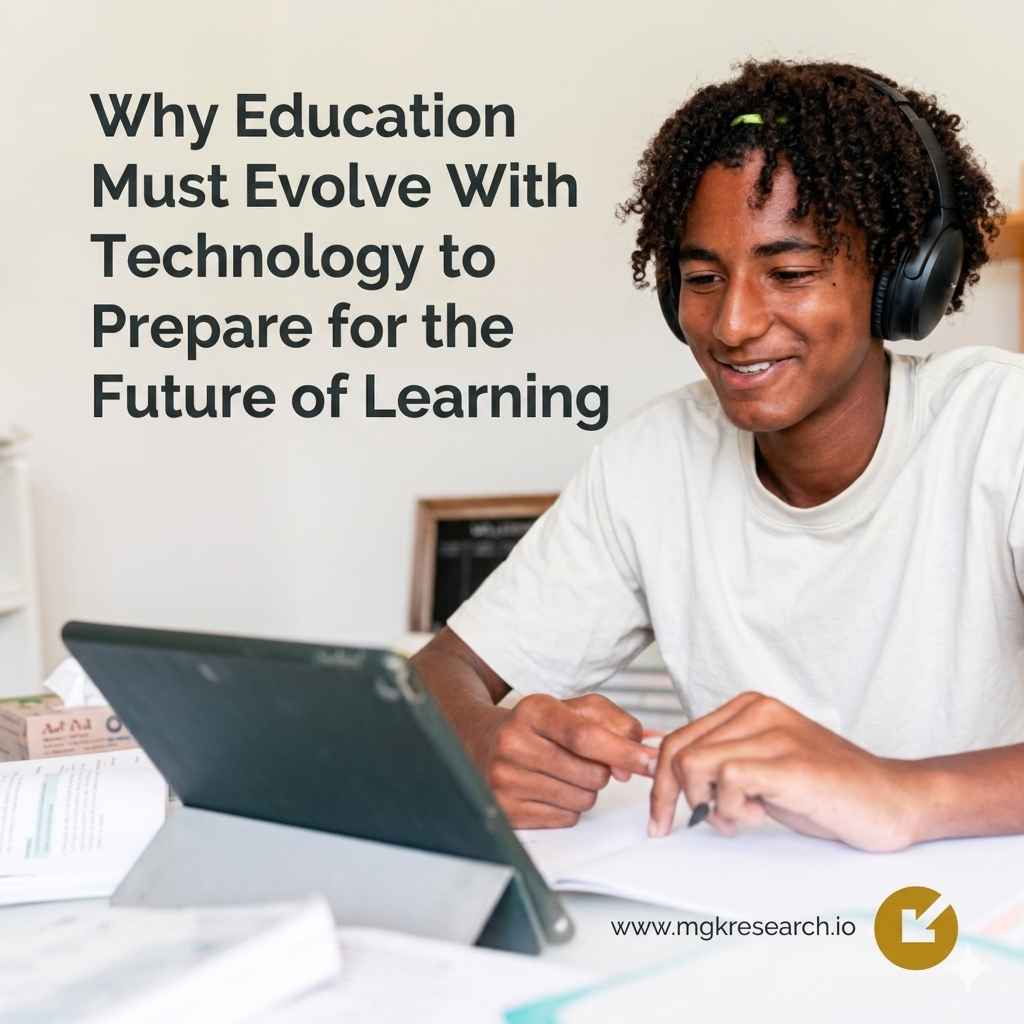
WHY EDUCATION MUST EVOLVE WITH TECHNOLOGY TO PREPARE FOR THE FUTURE OF LEARNING
Education has always been the foundation of progress, shaping societies and preparing individuals for the future. However, in today’s rapidly changing world, traditional education systems are no longer enough on their own. Technology is transforming every aspect of life, and education must evolve alongside it to remain relevant, effective, and future-focused.
From digital classrooms and online learning platforms to artificial intelligence and virtual simulations, technology is reshaping how students learn and how teachers teach. The integration of modern tools into education is not just an improvement; it is becoming a necessity for preparing students for the demands of the 21st century.
THE SHIFT FROM TRADITIONAL LEARNING TO DIGITAL EDUCATION
For decades, education relied heavily on classroom-based teaching, textbooks, and face-to-face instruction. While this system provided foundational knowledge, it often lacked flexibility and personalization.
Today, digital education has introduced a more dynamic and interactive approach. Online learning platforms, educational apps, and virtual classrooms have made education more accessible than ever before. Students can now learn at their own pace, revisit lessons, and access global knowledge resources with just a few clicks.
This shift from traditional learning to digital education represents a major transformation in how knowledge is delivered and consumed. It allows education to move beyond physical boundaries and reach learners in remote and underserved areas.
HOW TECHNOLOGY IS TRANSFORMING THE EDUCATION SYSTEM
Technology is revolutionizing education in multiple ways. One of the most significant changes is the rise of e-learning platforms, which provide structured courses on a wide range of subjects. These platforms allow students to learn anytime and anywhere, making education more flexible and inclusive.
Artificial intelligence is also playing a growing role in education. AI-powered tools can analyze student performance, identify learning gaps, and provide personalized recommendations. This helps educators tailor their teaching methods to meet individual student needs.
Virtual reality and augmented reality are introducing immersive learning experiences. Students can explore historical events, scientific concepts, and complex environments in a highly interactive way, making learning more engaging and effective.
Digital assessment tools are replacing traditional exams in many cases, allowing for real-time feedback and more accurate evaluation of student progress.
WHY EDUCATION MUST EVOLVE WITH TECHNOLOGY
The world is changing faster than ever before, driven by technological innovation. Industries are adopting automation, artificial intelligence, and digital systems, which require a workforce equipped with modern skills.
Traditional education systems often struggle to keep pace with these changes. Without integrating technology, students risk being unprepared for the demands of the modern job market.
Evolving education with technology ensures that students develop essential digital literacy skills, problem-solving abilities, and adaptability. These skills are critical in a world where jobs are constantly evolving and new career paths are emerging.
Technology also makes education more inclusive. Students with disabilities can benefit from assistive tools, while those in remote areas can access quality education without geographical limitations.
THE ROLE OF DIGITAL LITERACY IN MODERN EDUCATION
Digital literacy has become one of the most important skills in today’s world. It involves the ability to use digital tools, understand online information, and communicate effectively in a digital environment.
Incorporating digital literacy into education prepares students for careers in technology-driven industries. It also helps them navigate the internet safely, evaluate information critically, and avoid misinformation.
Schools and universities are increasingly integrating coding, data analysis, and digital communication into their curricula. These subjects are no longer optional but essential for future success.
ONLINE LEARNING AND THE RISE OF EDTECH PLATFORMS
Online learning has grown rapidly in recent years, especially with the rise of educational technology platforms. These platforms offer courses in academic subjects, professional skills, and personal development.
One of the key advantages of online learning is accessibility. Students can learn from top institutions and instructors regardless of their location. This democratization of education is breaking down barriers that once limited opportunities.
EdTech platforms also provide interactive features such as quizzes, video lectures, discussion forums, and progress tracking. These features enhance engagement and improve learning outcomes.
The flexibility of online education allows learners to balance studies with work and personal commitments, making lifelong learning more achievable.
ARTIFICIAL INTELLIGENCE IN EDUCATION
Artificial intelligence is playing a transformative role in modern education systems. AI-powered tools can personalize learning experiences based on student performance and behavior.
For example, adaptive learning systems adjust difficulty levels based on student progress, ensuring that learners are neither overwhelmed nor under-challenged. This personalized approach improves retention and understanding.
AI is also being used for automated grading, virtual tutoring, and administrative support. This reduces the workload on teachers and allows them to focus more on instruction and student engagement.
As AI continues to evolve, its role in education is expected to expand further, making learning more efficient and data-driven.
THE IMPACT OF TECHNOLOGY ON TEACHING METHODS
Technology has significantly changed how teachers deliver lessons. Traditional chalk-and-board methods are increasingly being replaced by interactive digital tools.
Smart classrooms equipped with projectors, tablets, and interactive boards allow teachers to present content in more engaging ways. Multimedia presentations, videos, and simulations help students understand complex concepts more easily.
Teachers can also use online platforms to share resources, assign homework, and track student progress in real time. This improves communication and enhances the overall learning experience.
Professional development for teachers has also improved through online training programs and digital certifications, helping educators stay updated with modern teaching methods.
CHALLENGES IN INTEGRATING TECHNOLOGY INTO EDUCATION
Despite its benefits, integrating technology into education comes with challenges. One major issue is the digital divide, where students in rural or low-income areas may lack access to devices and internet connectivity.
Another challenge is the lack of training for teachers. Many educators are not fully equipped to use advanced digital tools effectively, which can limit the impact of technology in classrooms.
There are also concerns about screen time and its impact on student health. Excessive use of digital devices can lead to reduced attention spans and other health-related issues if not managed properly.
Cybersecurity and data privacy are additional concerns, especially when using online platforms that store student information.
THE FUTURE OF EDUCATION WITH TECHNOLOGY
The future of education is deeply connected to technological advancement. Emerging technologies such as artificial intelligence, machine learning, blockchain, and virtual reality will continue to reshape how education is delivered.
Hybrid learning models, which combine traditional classroom teaching with online education, are expected to become more common. This approach offers flexibility while maintaining the benefits of face-to-face interaction.
Personalized learning will also become more advanced, allowing students to follow customized learning paths based on their strengths, interests, and career goals.
Lifelong learning will become a norm as individuals continuously update their skills to keep pace with changing job markets.
HOW STUDENTS CAN BENEFIT FROM TECHNOLOGY-DRIVEN EDUCATION
Students stand to gain significantly from the integration of technology in education. They gain access to a wider range of learning materials, interactive tools, and global knowledge resources.
Technology encourages self-paced learning, allowing students to take control of their education. It also promotes collaboration through online group projects and discussion platforms.
Additionally, exposure to digital tools prepares students for modern workplaces where technology is an essential part of daily operations.
HOW EDUCATION INSTITUTIONS CAN ADAPT TO TECHNOLOGICAL CHANGE
Educational institutions must take proactive steps to integrate technology effectively. This includes investing in digital infrastructure, training teachers, and updating curricula to include modern skills.
Schools and universities should also focus on creating inclusive learning environments that ensure all students have equal access to digital resources.
Partnerships with EdTech companies can help institutions stay updated with the latest tools and innovations in education.
CONCLUSION
Education must evolve with technology to remain relevant in a rapidly changing world. The integration of digital tools, artificial intelligence, and online learning platforms is transforming how knowledge is delivered and received.
By embracing technology, education systems can become more inclusive, flexible, and effective in preparing students for the future. While challenges exist, the benefits far outweigh the drawbacks.
The future of learning lies in a balanced approach that combines traditional teaching methods with modern technological innovations, ensuring that students are equipped with the skills they need to succeed in an increasingly digital world.
Read More
About The Author