ISLAMABAD – There was a time when the sound of a hockey stick striking a ball was the heartbeat of Pakistani sports. On Tuesday, in a quiet committee room in the capital, officials and legends of the game gathered to ensure that heartbeat doesn’t stop for good.
In a major push to reclaim a legacy that has faded over decades, the National Education–Hockey Coordination Committee unveiled an ambitious four-year roadmap aimed at doing something that hasn’t been tried with this level of coordination in years: putting hockey back into the hands of schoolchildren.
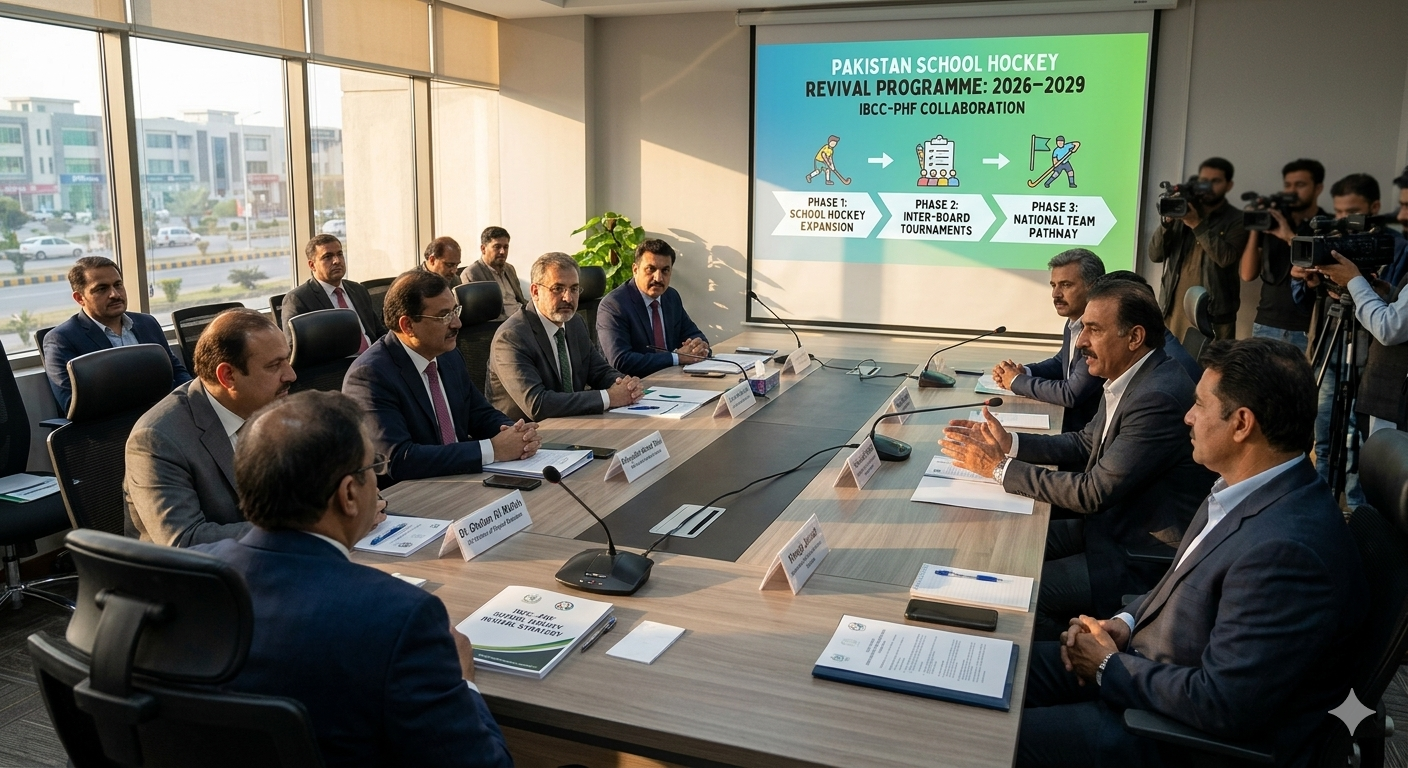
The meeting, held at the Inter Boards Coordination Commission (IBCC) secretariat on March 10, wasn’t just another bureaucratic briefing. It felt more like a rescue mission. Co-chaired by Dr. Ghulam Ali Mallah and Mohyuddin Ahmed Wani, the session brought together the people who run the country’s classrooms and the men who once conquered the world’s AstroTurf.
Sitting around the table were icons like Hassan Sardar, Islahuddin Siddique, and Khwaja Junaid—men who remember when Pakistan was the undisputed king of the sport. Their presence underscored a painful reality: Pakistan remains one of the most successful nations in hockey history, but its trophy cabinet has been collecting more dust than gold lately.
The “IBCC–PHF School and Inter-Board Hockey Revival Programme (2026–2029)” is the government’s answer to this decline. The strategy is straightforward but massive in scale. Instead of waiting for talent to show up at the national academies, the Pakistan Hockey Federation (PHF) is going to find it in the schoolyards.
“The talent pipeline has been dry for too long,” one official remarked during the session. The new program focuses on three main pillars: massive expansion of hockey in primary and secondary schools, the return of high-stakes inter-board tournaments, and a “structured pathway” that identifies a gifted kid in a small village and tracks them all the way to the national team.
The Federal Secretary for the Inter-Provincial Coordination Division made it clear that this isn’t just about handing out sticks. It’s about infrastructure and consistent competition. To ensure this doesn’t become another forgotten policy, a joint steering committee—featuring those same former Olympians—will oversee the rollout and hold educational boards accountable for the sport’s progress.
Read More: https://informal.pk/girls-education-in-pakistan-triumph-on-paper-disparities-in-practice/
The energy in the room was one of cautious optimism. The legends in attendance welcomed the move, noting that the “grassroots” level is the only place where the sport can truly be saved. By integrating hockey back into the education system, the government hopes to create a culture where being a hockey player is once again a dream for a young student, rather than a relic of their grandfather’s era.
As the meeting concluded, the message was clear: the “digital highway” might be the future of the economy, but for Pakistan’s national pride, the road to recovery begins on the dusty playing fields of its schools.
About The Author