How to Apply for Private University Admission
Private universities play a major role in higher education, especially in countries where public universities have limited seats and intense competition. For many students, private institutions offer flexibility, modern facilities, industry-focused programs, and multiple admission cycles. Understanding the admission process is essential to avoid mistakes and increase your chances of acceptance.
Applying to a private university is not difficult, but it requires planning, research, and proper documentation. Each institution follows its own admission policy, so students must stay informed and prepared. This guide explains the complete process step by step, from choosing a university to confirming admission.
Understanding Private Universities
Private universities are independent institutions that operate without direct government funding. They design their own academic programs, admission criteria, and fee structures. Most private universities focus on practical education, updated curricula, and strong industry links.
Students often prefer private universities because of smaller class sizes, flexible admission requirements, and quicker admission decisions. While tuition fees are generally higher, many institutions offer scholarships, financial aid, and installment plans.
When students search for the Best university In pakistan, private universities are often included due to their facilities, faculty quality, and international recognition.
Step 1: Research and Shortlist Universities
The first and most important step is research. Students should not apply blindly. Instead, they should shortlist universities based on academic goals, budget, location, and future career plans.
While researching, focus on program accreditation, faculty experience, campus facilities, alumni success, and industry partnerships. Visiting official university websites and trusted education portals is highly recommended.
For updated guidance, admission trends, and educational resources, students can explore this education section:
https://informal.pk/education/
This helps applicants understand program value and admission expectations before applying.
Step 2: Check Eligibility Criteria Carefully
Every private university has its own eligibility requirements. These usually depend on the level of study and program type.
For undergraduate programs, universities typically require Intermediate, A-Levels, or equivalent qualifications. Some institutions accept students with pending results, while others require final transcripts.
For graduate programs, a bachelor’s degree from a recognized institution is mandatory. Minimum CGPA or percentage requirements may apply. Some professional programs also require relevant academic background.
Students should always confirm eligibility directly from the university’s admission page to avoid rejection.
Step 3: Understand Admission Intakes and Deadlines
Private universities often offer multiple intakes throughout the year, such as Spring, Fall, and sometimes Summer. This flexibility allows students to apply without waiting for a full academic year.
However, deadlines vary widely. Missing an application deadline can delay admission by several months. Students should track application opening dates, submission deadlines, and test or interview schedules.
Applying early increases the chance of securing a seat, especially in competitive programs.
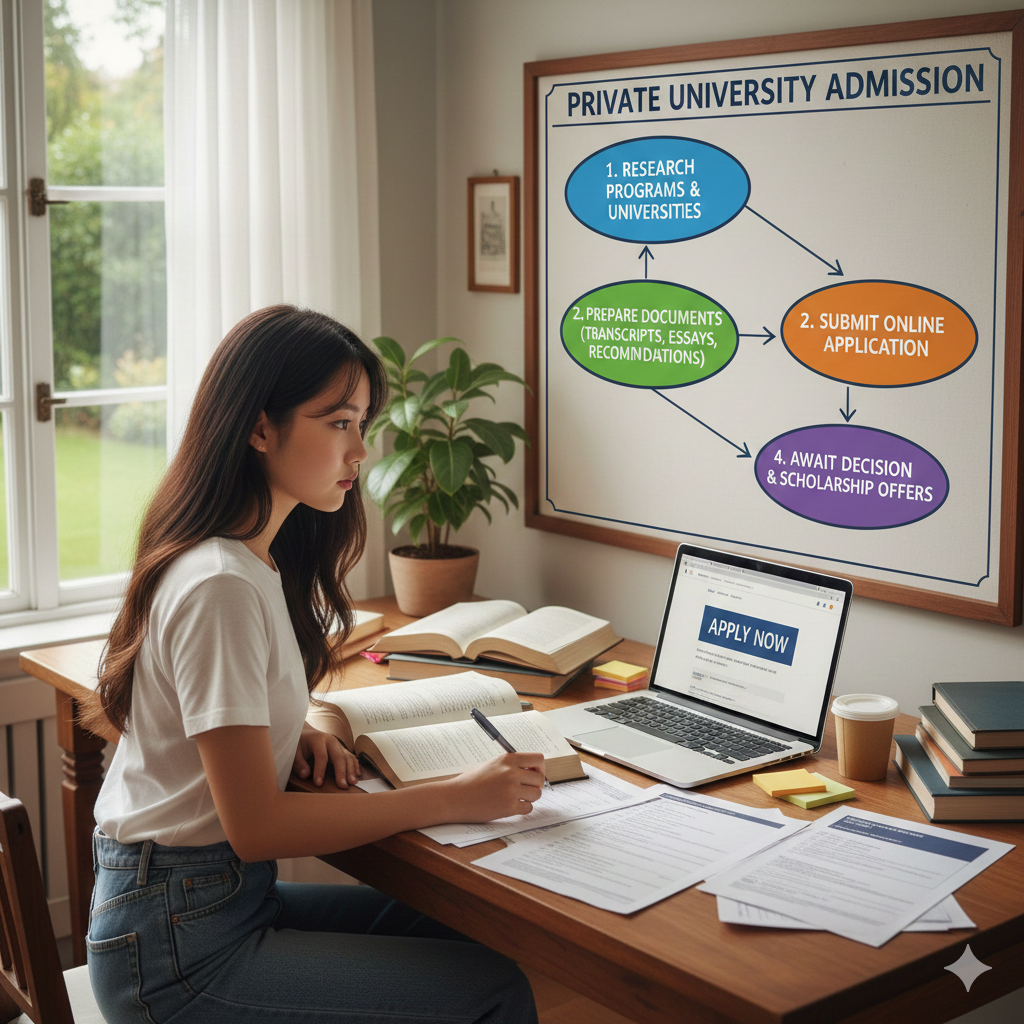
Step 4: Prepare Required Documents
Documentation is a crucial part of the admission process. Incomplete or incorrect documents are among the most common reasons for application rejection.
Generally required documents include academic transcripts, certificates, CNIC or passport copy, photographs, and application forms. Some universities may also ask for a personal statement, recommendation letters, or experience certificates.
Students should prepare scanned and hard copies in advance and ensure that all documents are clear and attested if required.
Step 5: Submit the Application
Most private universities now offer online application systems. Students must create an account, fill in personal and academic details, upload documents, and submit the form.
Accuracy is extremely important at this stage. Any mismatch between entered information and documents can create problems later. Students should double-check spellings, marks, and program selection before submission.
Application fees are usually non-refundable, so careful submission is essential.
Step 6: Entry Test or Interview Process
Many private universities conduct their own entry tests or interviews. These assessments are designed to evaluate a student’s basic knowledge, communication skills, and subject understanding.
Some universities accept third-party test scores, while others rely only on internal assessments. Interviews are often informal and focus on academic interest, motivation, and future goals.
Preparation for tests and interviews increases confidence and improves the chance of selection.
Step 7: Admission Offer and Fee Submission
After evaluation, selected candidates receive an admission offer letter. This letter includes details about the program, fee structure, and deadline for confirmation.
Fee submission is time-sensitive. If the fee is not submitted by the given deadline, the seat may be offered to another candidate. Some universities allow installment plans, but these must be approved officially.
Students should carefully read all terms before confirming admission.
Step 8: Scholarship and Financial Aid Options
Private universities often provide merit-based and need-based scholarships. These may be awarded based on academic performance, test scores, or financial background.
Students interested in scholarships should apply early and submit supporting documents. Some scholarships are limited and awarded on a first-come basis.
Financial planning is important when choosing a private university, especially for multi-year degree programs.
Step 9: Final Enrollment and Orientation
Once fees are submitted, students complete the enrollment process. This may include document verification, course registration, and issuance of student ID cards.
Orientation sessions are organized to familiarize new students with campus rules, academic systems, and facilities. Attending orientation helps students settle smoothly into university life.
Common Mistakes to Avoid
Many students lose admission opportunities due to simple mistakes. Applying without checking eligibility, missing deadlines, submitting incomplete documents, or choosing the wrong program are common issues.
Another mistake is relying on unofficial sources for information. Always trust official university websites and recognized education platforms.
Choosing a university only based on name instead of program quality can also affect long-term career outcomes.
Why Private Universities Are a Popular Choice
Private universities continue to grow in popularity due to flexibility, industry-aligned programs, and modern teaching methods. Students looking for the Best university In pakistan often consider private institutions because of faster admissions, updated curricula, and international exposure.
For students who want skill-based education and practical learning, private universities offer strong opportunities.
Frequently Asked Questions (FAQs)
1. Is admission easier in private universities compared to public universities?
Yes, private universities generally have more flexible admission criteria and multiple intakes, making the process smoother for many students.
2. Do private universities require entry tests?
Some do, while others rely on academic records or interviews. It depends on the institution and program.
3. Can I apply with pending results?
Many private universities accept applications with pending results, but final admission depends on result submission.
4. Are degrees from private universities recognized?
Yes, if the university is recognized by relevant regulatory authorities, its degrees are valid.
5. How long does the admission process take?
It can take anywhere from a few days to a few weeks, depending on the university’s evaluation process.
6. Are scholarships available in private universities?
Yes, many private universities offer merit-based and need-based scholarships.
7. Can international students apply to private universities?
Yes, most private universities accept international students with additional documentation.
8. Is it possible to transfer from one university to another?
Yes, credit transfer is possible in some cases, subject to university policies.
9. What happens if I miss the fee deadline?
Missing the deadline may result in cancellation of the admission offer.
10. How do I choose the right private university?
Focus on program quality, accreditation, faculty, fees, and career support rather than just rankings.
Conclusion
Applying to a private university is a structured process that becomes simple with proper planning and research. From selecting the right institution to submitting documents and confirming admission, each step matters.
Students who stay informed, apply early, and follow official guidelines increase their chances of securing admission in a program that aligns with their academic and career goals. With the right approach, private universities can offer excellent educational opportunities and a strong foundation for the future.
About The Author