How to Transfer from One University to Another in Pakistan
Transferring from one university to another in Pakistan is a serious academic decision that many students consider at some point in their education. This decision can be influenced by multiple factors such as academic quality, personal circumstances, financial issues, location, or dissatisfaction with the current institution. While the process is possible, it requires careful planning, documentation, and an understanding of university and regulatory policies.
In Pakistan, university transfers are governed by individual university rules as well as guidelines from regulatory bodies such as the Higher Education Commission (HEC). The process is not automatic and depends on seat availability, academic performance, and equivalence of courses. Understanding how the transfer system works can help students avoid delays and rejection.
Understanding University Transfer in Pakistan
A university transfer means shifting enrollment from one HEC-recognized university to another while continuing the same or a closely related degree program. Transfers are generally allowed within the same discipline, such as from BS Computer Science to BS Computer Science, though some universities may allow closely related programs after reviewing course compatibility.
Transfers can occur between public universities, from private to public universities, between private universities, or even from a foreign university to a Pakistani institution. However, every case is assessed individually.
Common Reasons Students Transfer Universities
Students choose to transfer for academic, personal, or professional reasons. One common reason is the desire to study at a more reputed institution or what students consider the Best university In pakistan for their chosen field. Others face relocation due to family or financial constraints.
Some students feel their current university lacks proper facilities, qualified faculty, or industry exposure. In other cases, students may struggle with the academic environment or assessment system. Regardless of the reason, universities usually focus more on eligibility and merit than personal justification.
Eligibility Criteria for University Transfer
Eligibility criteria vary by institution, but there are some common requirements across most Pakistani universities. The student must be enrolled in an HEC-recognized university and degree program. A minimum CGPA is usually required, often ranging from 2.5 to 3.0, depending on the competitiveness of the program.
Most universities require students to have completed at least one semester, while some allow transfers only after two semesters. Students with failed courses or disciplinary records may face rejection. Additionally, transfer requests are typically not accepted in the final year of the degree.
Role of HEC in University Transfers
The Higher Education Commission does not directly approve transfers, but it plays a key role in recognition and equivalence. Both the previous and the new university must be HEC-recognized. If the degree programs differ slightly, universities may seek HEC guidelines to evaluate course equivalence.
For students transferring from foreign universities, HEC equivalence certification becomes mandatory. Without HEC recognition, credits may not be accepted, and the transfer request can be declined.
Step-by-Step Transfer Process in Pakistan
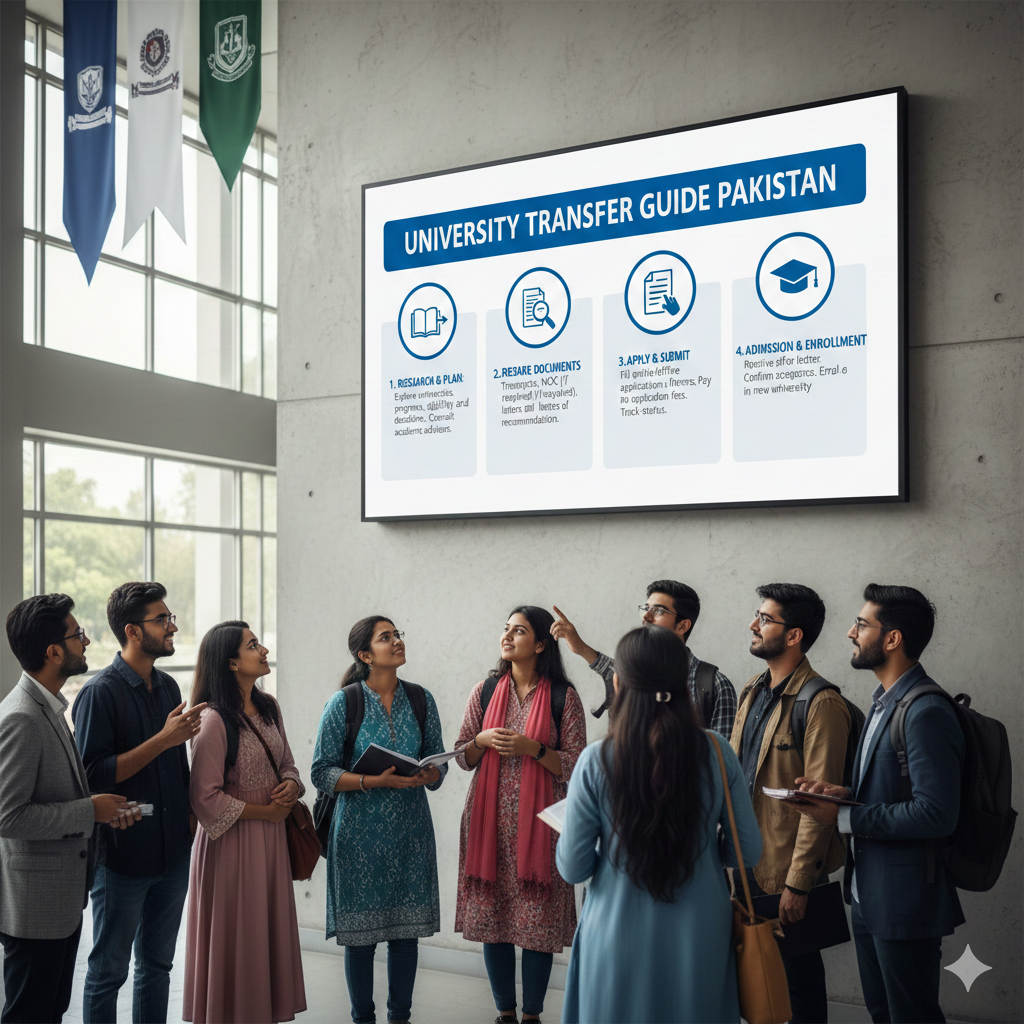
The first step is researching the target university’s transfer policy. Most universities publish admission or transfer guidelines on their official websites. Students should confirm whether transfer seats are available in their desired program.
Next, students apply formally during the university’s admission cycle. Transfer applications are usually accepted during fall admissions, though some universities allow them in spring sessions. After submission, the university reviews academic records and course outlines.
If approved, the student receives a provisional admission offer. At this stage, the student must obtain a No Objection Certificate (NOC) or migration certificate from the current university. Final admission is confirmed after document verification and fee submission.
Required Documents for University Transfer
Documentation is a critical part of the transfer process. Universities generally require academic transcripts, course outlines, admission letters, and a migration or NOC from the previous institution. Some universities also ask for character certificates and copies of CNIC or B-Form.
Foreign or private university students may need additional verification documents. Incomplete or incorrect documentation is one of the most common reasons for transfer delays or rejection.
Credit Transfer and Course Mapping
Credit transfer determines how many previously completed courses will be accepted by the new university. This depends on course content, credit hours, and grading system compatibility. Universities usually form an academic committee to review course outlines.
Not all credits are transferable. In some cases, students may need to repeat certain courses or even lose an academic year. This is especially common when transferring between universities with different curricula or academic standards.
Transfer from Private to Public Universities
Many students aim to transfer from private universities to public institutions due to lower fees and stronger reputations. However, this type of transfer is highly competitive. Public universities have limited seats and strict merit requirements.
Students must meet the current merit of the program, not the merit at the time of their original admission. Even strong academic records do not guarantee acceptance, especially in high-demand programs like engineering, medical sciences, and computer science.
Transfer Between Public Universities
Transfers between public universities are possible but not very common. These usually occur due to relocation or special circumstances. Universities may allow such transfers if the academic programs are identical and seats are available.
In most cases, students still need to apply through the admission office and compete with other transfer applicants. Direct university-to-university transfers without formal admission processes are rarely accepted.
Financial and Academic Implications
Transferring universities can have both financial and academic consequences. Students may lose previously paid fees, especially non-refundable charges. Scholarships or fee concessions may not transfer to the new university.
Academically, students may face adjustment challenges due to different teaching styles, grading systems, and academic pressure. It is important to consider these factors before making a final decision.
Importance of Choosing the Right University
Selecting the right university from the start can save time, money, and effort. Students should research faculty quality, accreditation, campus facilities, and graduate outcomes. Reliable educational resources can help students make informed decisions about universities and degree programs.
For guidance on universities, admissions, and academic planning in Pakistan, students can explore detailed education-related resources available at
https://informal.pk/education/
Can Transfers Improve Career Prospects?
A successful transfer to a better academic environment can positively impact career prospects. Graduating from a reputable institution can improve employability, networking opportunities, and access to internships.
However, employers focus more on skills, performance, and experience than just university names. A transfer should be part of a broader academic and career strategy, not the only solution.
Challenges Faced During the Transfer Process
Students often face delays, lack of clear communication, and inconsistent policies across universities. Some universities process transfers slowly, while others provide limited guidance. Course mismatches and credit losses are also common challenges.
To minimize problems, students should communicate clearly with admission offices, keep copies of all documents, and apply early during admission cycles.
FAQs
1. Is university transfer allowed in Pakistan?
Yes, most HEC-recognized universities in Pakistan allow transfers, subject to eligibility and seat availability.
2. Can I transfer after the first semester?
Many universities allow transfers after one or two semesters, but policies vary by institution.
3. Is CGPA important for transfer?
Yes, CGPA plays a major role. Most universities require a minimum CGPA between 2.5 and 3.0.
4. Can I transfer from private to public university?
Yes, but it is highly competitive and depends on merit and available seats.
5. Will all my credits transfer?
Not necessarily. Credit transfer depends on course compatibility and academic committee approval.
6. Do I need HEC approval for transfer?
HEC approval is not required for local transfers, but both universities must be HEC-recognized.
7. Can I change my degree program during transfer?
Most universities do not allow major program changes during transfer.
8. Is a migration certificate compulsory?
Yes, most universities require a migration or NOC from the previous institution.
9. Can I transfer in my final year?
Transfers in the final year are usually not allowed.
10. Does transferring affect my degree duration?
It can. Some students may need extra semesters if credits are not fully transferred.
Conclusion
Transferring from one university to another in Pakistan is possible, but it requires careful planning and realistic expectations. Students should thoroughly review eligibility criteria, understand credit transfer policies, and consider academic and financial impacts before applying. A well-informed transfer decision can help students align their education with long-term academic and career goals, especially when aiming for quality institutions and better learning environments.
About The Author