
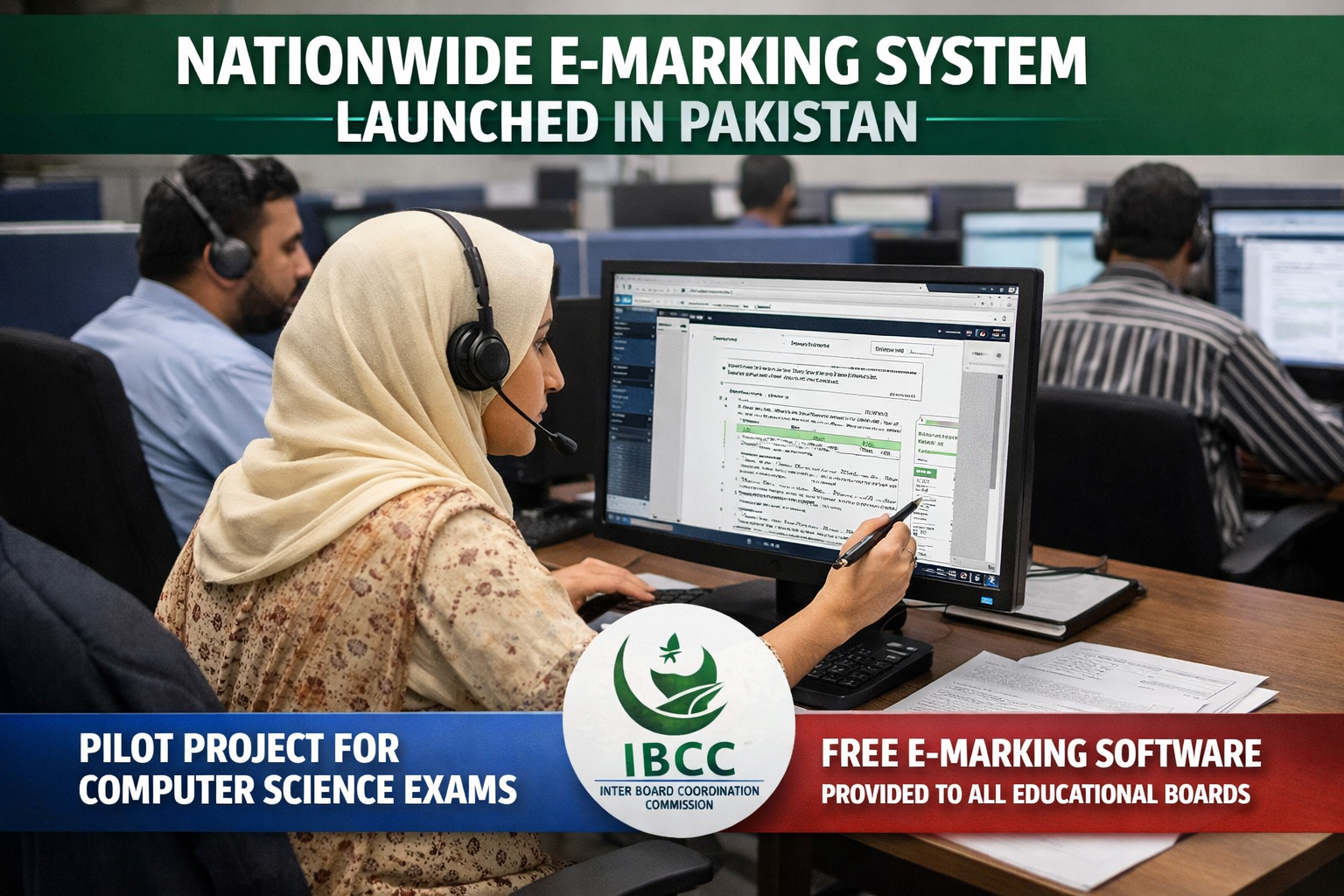
In a major step towards digitising the country’s examination process, a special software for online marking has been developed and implemented across educational boards in Pakistan. The new e-marking system, introduced under the supervision of the Inter Board Coordination Commission (IBCC), aims to improve transparency, accuracy, and efficiency in the assessment of examination papers.
According to official sources, the system has been rolled out nationwide, marking a significant reform in the traditional paper-checking process. The initiative is part of broader efforts to modernise examination practices and address long-standing concerns regarding manual marking errors, delays in result compilation, and inconsistencies in evaluation standards.
As part of the first phase, the e-marking system will be applied to the Computer Science paper under a pilot project during the current examination cycle. Officials said the subject was selected due to its technical nature and compatibility with digital assessment methods. If the pilot proves successful, the system will gradually expand to cover all subjects in board examinations.
The IBCC has issued formal directives to all educational boards, instructing them to ensure full implementation of the online marking system. Board officials have been asked to make necessary arrangements, including technical training for examiners and setting up required digital infrastructure.
IBCC representatives confirmed that the specially designed software has been provided free of cost to all educational boards. This move is intended to ensure uniform adoption across provinces and eliminate financial barriers that could delay implementation. Authorities believe the centralised approach will help standardise marking procedures nationwide.
Education experts have welcomed the development, saying the shift to digital marking could significantly reduce human error and minimise the risk of result manipulation. With answer scripts scanned and uploaded to a secure system, examiners will be able to assess papers remotely while maintaining a digital record of marks awarded.
Officials also highlighted that the e-marking system is expected to speed up the result compilation process, allowing students to receive their results in a shorter timeframe. Enhanced monitoring features will enable board authorities to review marking patterns and ensure accountability.
The nationwide rollout reflects the government’s commitment to strengthening transparency in the education sector. If successfully executed, the transition to online marking could represent one of the most significant reforms in Pakistan’s examination system in recent years, paving the way for a more reliable and technology-driven assessment framework.
About The Author