
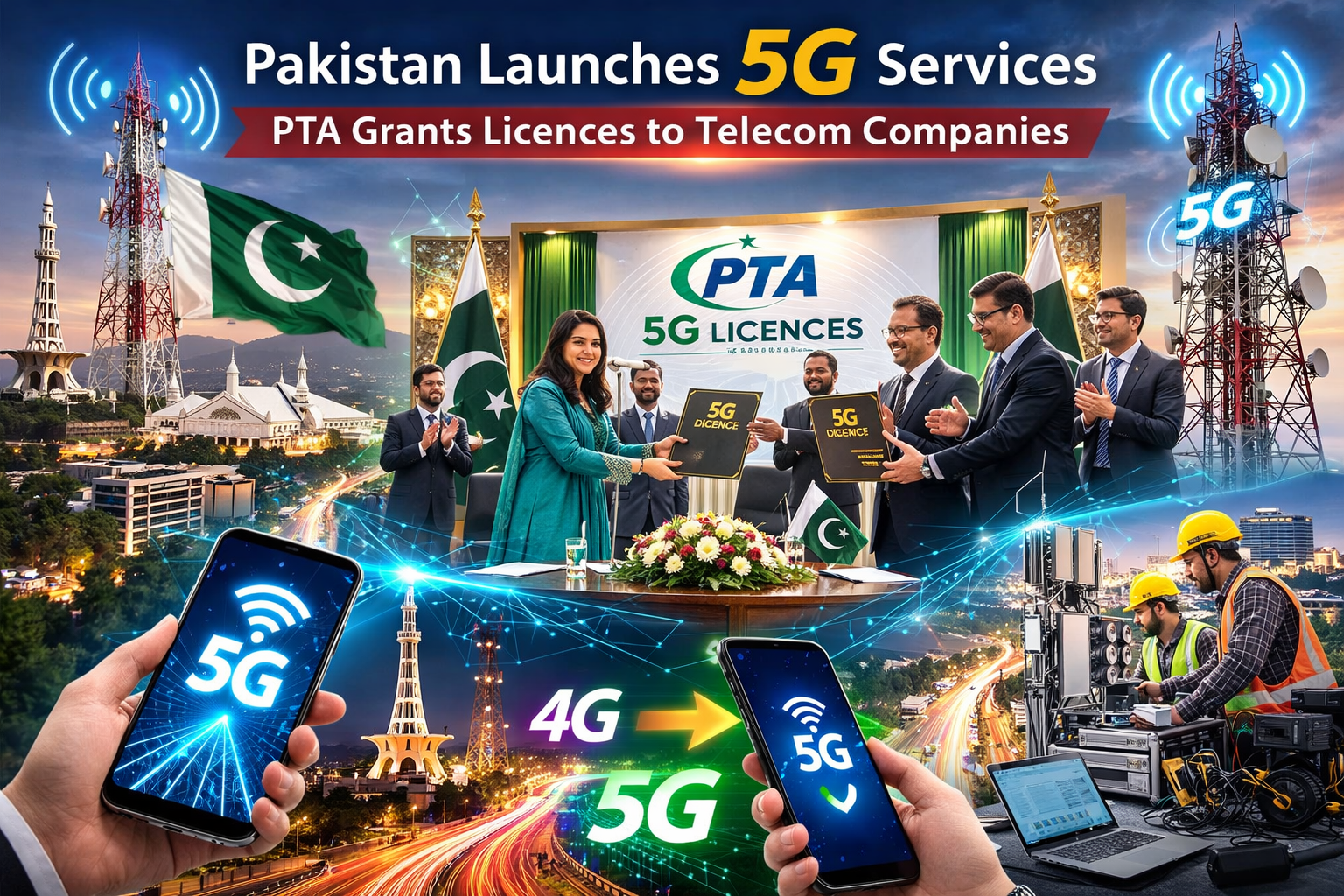
ISLAMABAD: Pakistan has taken a long-awaited leap into the next phase of digital connectivity, as the Pakistan Telecommunication Authority (PTA) formally awarded 5G licences to three major telecom operators, setting the stage for the country’s transition to high-speed, next-generation mobile services.
The announcement came during a ceremony held at the Prime Minister’s House, where senior government officials, telecom executives, and regulators gathered to mark what many are calling a turning point for Pakistan’s digital future. Federal IT Minister Shaza Fatima and PTA Chairman Major General (retd) Hafeezur Rehman were among the key figures present, alongside members of the federal cabinet and top industry representatives.
With licences now in place, telecom companies are expected to move swiftly toward launching 5G services. Industry sources say the groundwork has already been laid over the past several months. From upgrading network infrastructure to installing advanced equipment and running technical trials, operators have been quietly preparing for this moment, ensuring they can roll out services with minimal delay.
The financial commitment required for entry into the 5G space has also been substantial. Each participating company submitted a bank guarantee of $15 million, a requirement set by regulators to ensure seriousness and capability. Officials view this as a strong signal that telecom providers are not only compliant but fully prepared to invest in the country’s digital expansion.
Initial rollout plans suggest that services will first go live in Islamabad and other major urban centres, where demand for high-speed internet is at its peak. From there, coverage will expand in phases, with a focus on maintaining service quality and network stability, particularly in densely populated areas.
For consumers, the arrival of 5G promises a noticeable shift in how digital services are experienced. Faster internet speeds and significantly lower latency are expected to improve everything from video streaming and online gaming to remote work and virtual communication.
More importantly, experts believe the technology will open doors to innovations such as smart city solutions, connected devices through the Internet of Things (IoT), and more advanced digital platforms.
Government officials have framed the development as more than just a technological upgrade. They see it as a key driver of economic growth, capable of boosting productivity, attracting investment, and creating new opportunities across sectors. Improved connectivity is also expected to strengthen Pakistan’s position in the global digital economy, an area where competition is rapidly intensifying.
However, challenges remain. Ensuring affordability, expanding coverage beyond major cities, and maintaining consistent service quality will be critical as the rollout progresses. For now, though, the mood within the industry is one of cautious optimism.
After years of planning and delays, Pakistan’s entry into the 5G era finally appears to be underway a move that could reshape the country’s digital landscape in the years ahead.
About The Author