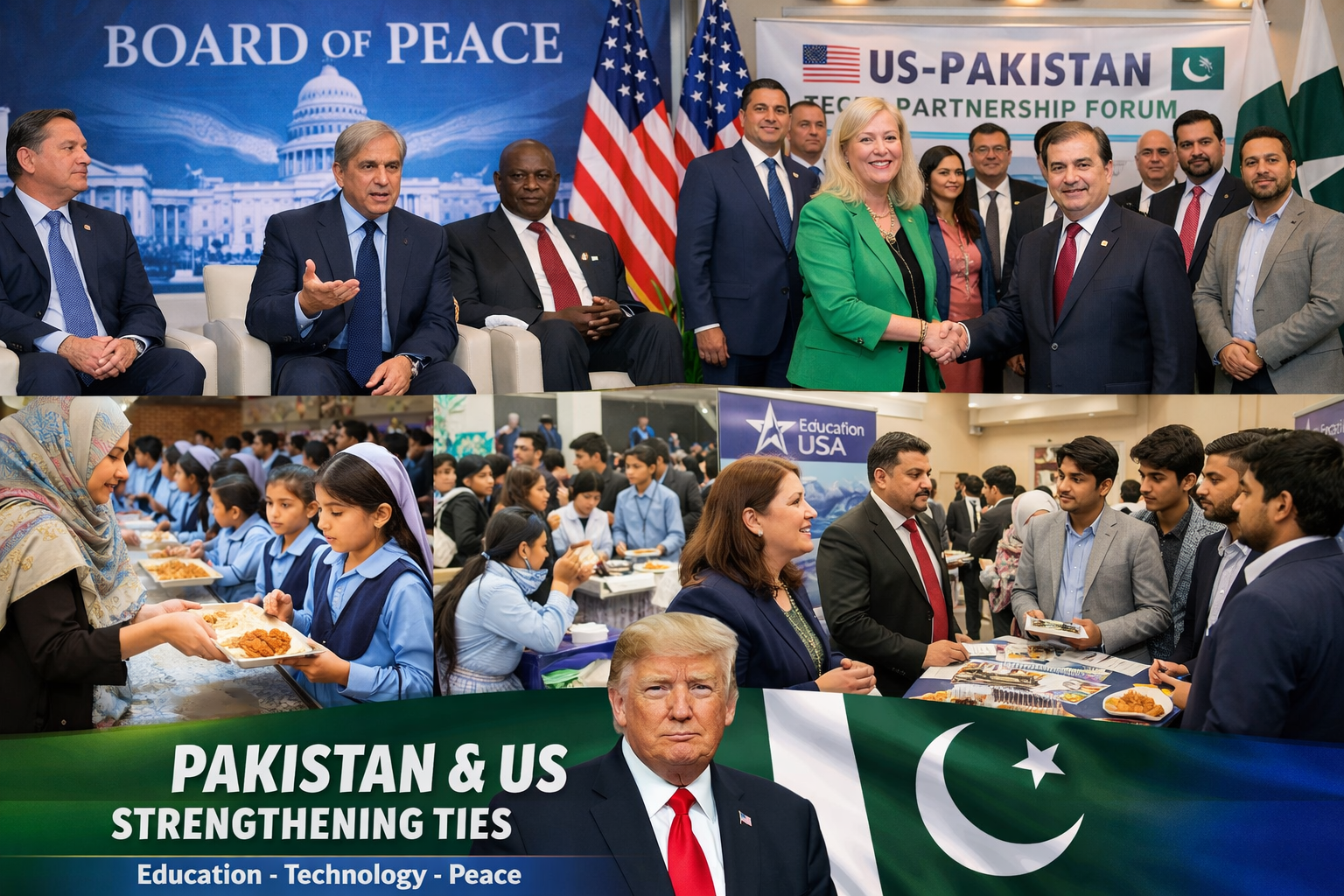
Pakistan and the United States signalled a renewed push to strengthen bilateral ties this week, as Prime Minister Shehbaz Sharif joined global leaders at the inaugural Board of Peace gathering in Washington and a series of joint initiatives unfolded across education, technology and youth development sectors.
The diplomatic activity comes at a time when both nations are looking to expand cooperation beyond traditional security frameworks, focusing instead on human development, innovation and long-term economic opportunity. The week’s developments also coincided with the holy month of Ramzan, lending a tone of reflection and goodwill to the engagements.
In Washington, Prime Minister Sharif’s participation in the Board of Peace marked a notable moment in Pakistan’s outreach to international partners. The gathering brought together political leaders and policymakers to discuss global stability, dialogue and pathways to peace. Pakistani officials described Sharif’s presence as part of a broader effort to reinforce Islamabad’s commitment to constructive diplomacy and multilateral engagement.
Back home, one of the most significant announcements came from the US Department of Agriculture, which formally launched the Sindh School Meals Program. Valued at 22.4 billion rupees, the initiative aims to support more than 200,000 students across 1,300 schools in Sindh.
The program will provide nutritious meals, improve access to clean drinking water and upgrade sanitation facilities, measures officials say are designed to improve both attendance and learning outcomes.
Education experts have long argued that hunger and inadequate sanitation are major barriers to student performance, particularly in underserved communities. By addressing these basic needs, the initiative seeks to create a healthier learning environment for young Pakistanis.
The program aligns with the “America First” foreign assistance policy under President Donald Trump’s administration. US officials say the policy focuses on promoting self-sufficiency while ensuring that assistance directly benefits local communities. Rather than fostering dependency, they argue, such projects are structured to empower local institutions and build sustainable capacity.
Meanwhile, technology cooperation was also on the agenda. US Chargé d’Affaires Natalie Baker convened a forum bringing together representatives from 25 American companies and senior Pakistani officials. The meeting explored ways to deepen technology partnerships, encourage innovation and expand investment in Pakistan’s growing tech sector.
Participants discussed collaboration in areas ranging from digital infrastructure to entrepreneurship and workforce development. With Pakistan’s young population increasingly entering the digital economy, officials from both sides see technology as a natural bridge for economic cooperation.
Education exchanges were another focal point of the week. The EducationUSA spring college recruitment tour concluded in Islamabad after visiting Karachi and Lahore. Sixteen representatives from American universities participated in the outreach effort, engaging directly with thousands of Pakistani students eager to explore higher education opportunities in the United States.
Organizers said the strong turnout reflected sustained interest among Pakistani youth in international education and cross-cultural exchange. For many students, the sessions offered practical guidance on admissions, scholarships and campus life.
As these initiatives unfolded, President Donald Trump extended Ramzan greetings to Muslims observing the holy month. In his message, he expressed hope that this period of reflection and fellowship would bring peace, happiness and joy to families and communities around the world.
Taken together, the week’s events underscored a broader effort by Islamabad and Washington to recalibrate relations around shared goals — education, innovation and peace, even as the two countries navigate a complex global landscape.
About The Author