
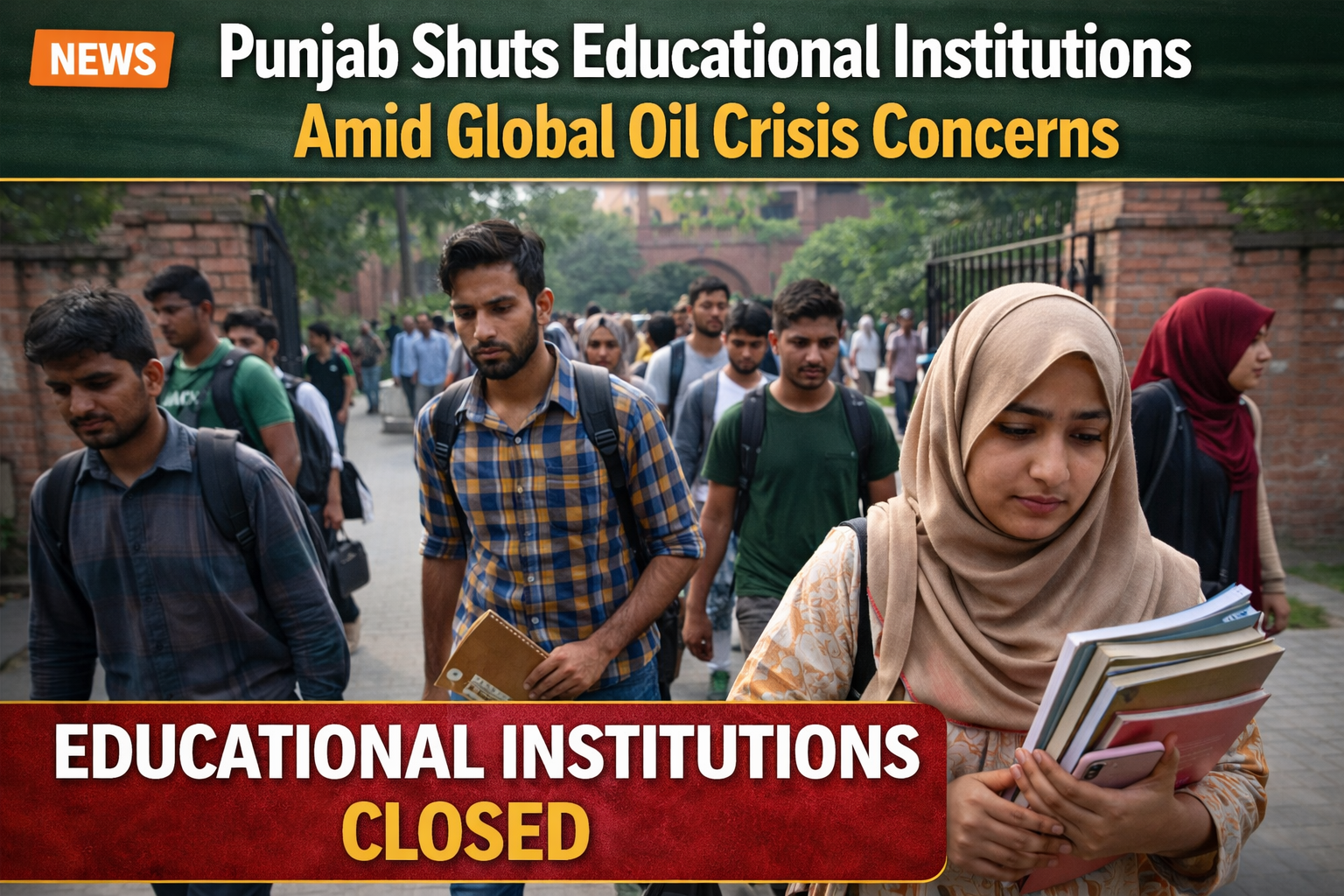
LAHORE — The provincial government in Punjab on Monday ordered the closure of all educational institutions across the province, citing economic pressures linked to the ongoing global oil crisis.
According to officials, the decision affects schools, colleges, and universities throughout Punjab and is part of a broader effort to manage rising costs caused by soaring international oil prices. Authorities said the move is aimed at conserving resources as economic uncertainty grows.
Provincial officials explained that the surge in oil prices is largely tied to instability in the Middle East, where ongoing conflict has disrupted global energy markets. The resulting increase in fuel prices has placed additional strain on government budgets and public services.
A statement issued by the provincial administration said the temporary shutdown of educational institutions is intended to reduce fuel consumption and limit operational costs associated with transportation and campus activities.
“Given the current economic challenges, these steps are necessary to ensure efficient use of available resources,” the statement noted.
The decision has prompted immediate reactions from students and parents. Shortly after the announcement, students were seen leaving campuses across Lahore, many expressing concern about the interruption to their academic schedules.
Read More: https://informal.pk/punjab-strips-center-examiners-of-grading-power-in-practical-exam-overhaul/
Some students said they worry the closure could affect upcoming exams and coursework if the shutdown continues for an extended period. “It’s worrying because we don’t know how long this will last,” said a university student leaving campus. “Our studies could be affected if classes remain suspended.”
Alongside the shutdown of educational institutions, the provincial government has also introduced additional cost-cutting measures. One of the key steps includes reducing fuel allowances for government employees.
Officials said the reduction is intended to help lower fuel consumption during a time when energy costs are climbing and supplies are under pressure.
Authorities emphasized that the decision was taken after reviewing the economic implications of the oil crisis and the financial burden it places on provincial resources. By limiting travel and operational expenses linked to educational institutions, the government hopes to ease some of the pressure on the provincial budget. Despite the sweeping nature of the announcement, officials have not specified how long the closures will remain in place.
Instead, the government said the situation will be closely monitored, with regular reviews based on developments in global oil markets and the broader economic outlook.
“The situation is evolving,” an official said. “We will continue to assess the circumstances and make decisions that are in the best interest of the public.”
The provincial administration has urged citizens to cooperate with the measures, stressing that they are temporary and designed to stabilize the situation during a challenging economic period.
Further updates regarding the reopening of educational institutions are expected once authorities evaluate changes in global energy prices and their impact on the local economy. For now, students across Punjab are left waiting for clarity on when classrooms will reopen and academic activities will resume.
About The Author