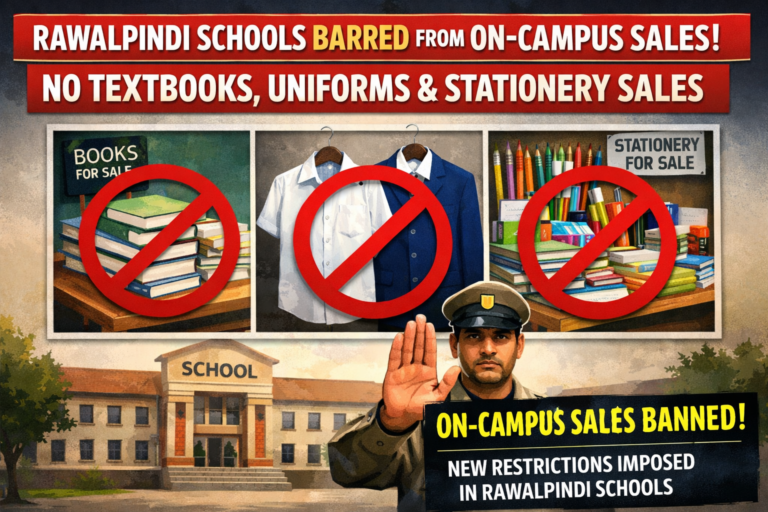
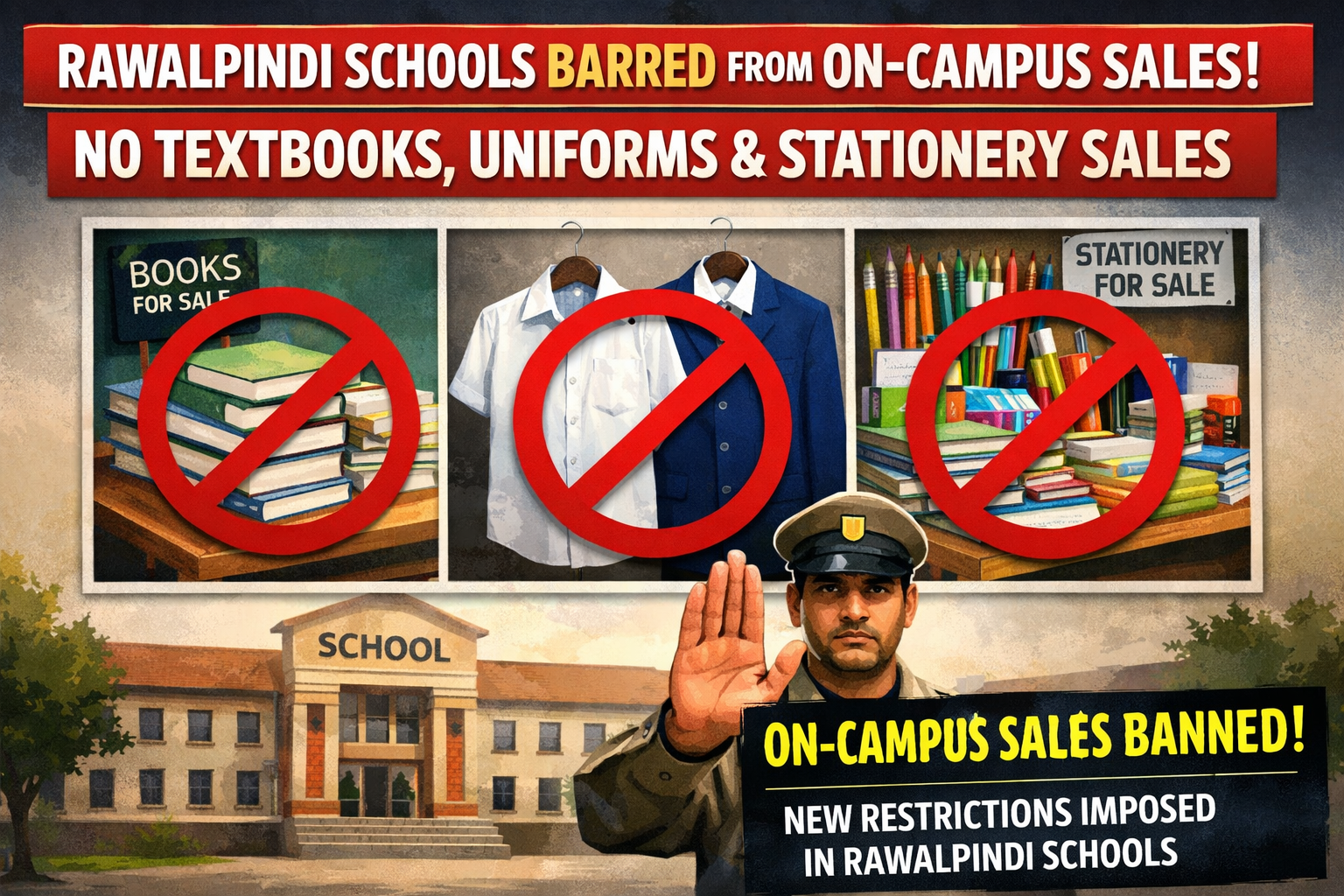
RAWALPINDI — The Education Department has formally prohibited all public and private schools in Rawalpindi from selling textbooks, notebooks, stationery, uniforms, badges, or ties on their campuses, marking a major step to regulate school supply practices and curb undue financial pressure on parents. The new policy applies to institutions of all sizes across the Rawalpindi Division and prohibits any arrangements with shopkeepers to sell school-related items on or through school premises.
According to the official directive, schools are also barred from forcing students to purchase books or uniforms from designated vendors. The Education Department has warned that any institution found violating the policy may face strict penalties, including fines or potential cancellation of registration, underlining the government’s commitment to enforce compliance.
The timing of the policy aligns with the start of annual examinations, results, and new admissions in schools across the division, a period when parents typically purchase books, uniforms, and other school essentials. Authorities have stressed that the directive is aimed at protecting students and parents from monopolistic practices and inflated prices imposed by some schools.
Despite the ban, some parents and students have complained that several major private school chains continue to sell books, stationery, and uniforms through their own outlets. These parents argue that the prices of textbooks and uniforms have risen compared to last year, placing an additional financial burden on families. “The officials already know which schools are violating the rules,” said one parent, requesting anonymity, highlighting the frustration among families who feel the policy is not yet being fully enforced.
In response, the newly appointed Executive Officer of the District Education Authority Rawalpindi confirmed that authorities will monitor all schools daily. “Any violations will be addressed immediately,” the officer said, emphasizing that the government is committed to ensuring transparency and fairness in school supply practices. Regular inspections and surprise checks have been promised to identify institutions that fail to comply with the rules.
Education experts note that the ban aims to promote equity among students and reduce unnecessary commercial pressures within educational institutions. By prohibiting on-campus sales, the policy seeks to give parents the freedom to purchase textbooks, uniforms, and stationery from vendors of their choice, fostering competition and potentially reducing costs.
The move has also generated discussions about broader reforms in the private education sector. Parents and advocacy groups have called for clear pricing guidelines for school supplies to prevent exploitation, arguing that some schools continue to generate additional revenue by selling essentials at inflated rates. Officials have assured that, alongside monitoring, measures will be taken to discourage such practices and protect the financial interests of families.
As Rawalpindi Division’s schools continue preparations for upcoming academic activities, the Education Department has reiterated that compliance is mandatory. Officials urge parents and students to report any school found violating the directive so that action can be taken swiftly.
This decision reflects a growing effort by authorities to streamline school operations, promote fairness, and relieve the financial burden on parents, ensuring that access to education remains equitable and free from unnecessary commercial pressures.
About The Author